WordHub vs Google Dictionary Extension
Google Dictionary is fast for definitions. WordHub is built for retention. Here's what that means in real life.
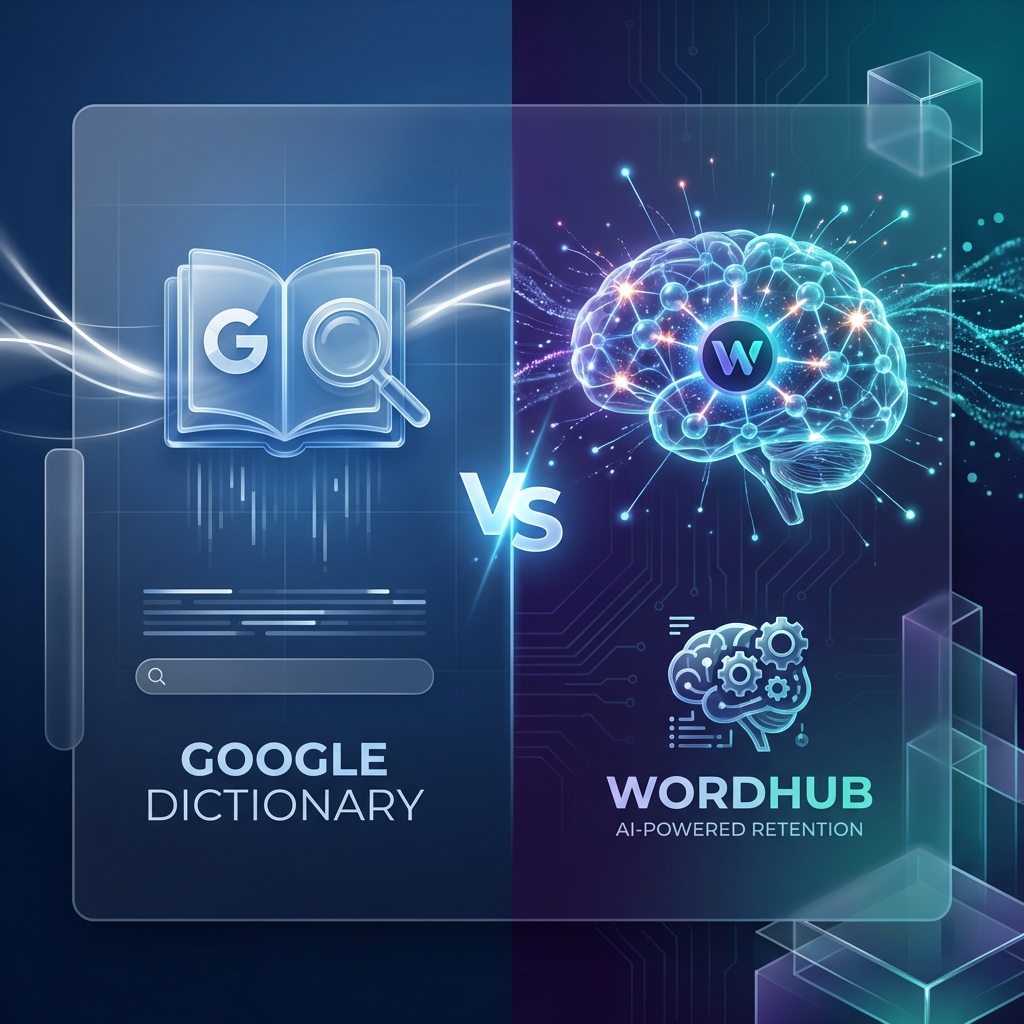
Google Dictionary and WordHub solve two different problems.
Google Dictionary answers: “What does this word mean right now?”
WordHub answers: “How do I remember this word next week?”
Quick Comparison
| Feature | Google Dictionary | WordHub |
|---|---|---|
| Lookup speed | Fast | Fast (hover + Alt+D / double-click) |
| Save words | No | Yes (with sentence + page source) |
| Spaced repetition | No | Yes (daily review queue / quiz) |
| Context retention | Minimal | Sentence + page title + URL |
| Page scanning | No | Yes (scan page, highlight, jump to occurrences) |
| Reading Mode | No | Yes (distraction-free view + translation support) |
Who Should Use Google Dictionary?
If you just need fast definitions and you don't care whether you remember the word next week, Google Dictionary is enough. It's lightweight, simple, and gets out of the way.
Who Should Use WordHub?
If you want vocabulary growth—not just vocabulary lookups—WordHub is built for you. The core loop is intentionally simple:
- Lookup fast while you read.
- Save selectively (only the words worth keeping).
- Review daily with spaced repetition so words don't leak.
That's the difference: WordHub doesn't just answer questions. It builds a system.
Verdict
If you want a dictionary popup, choose Google Dictionary. If you want a vocabulary habit, choose WordHub.